
Riding season in the US is exhilarating while it lasts, but when winter comes, the cold, snow, and moisture become hostile to anything with two wheels. Unlike in warmer climates, where motorcycles can be used nearly year-round, motorcycle riders must make a decision—either adapt their riding habits for year-round use or properly store their bike during the winter.
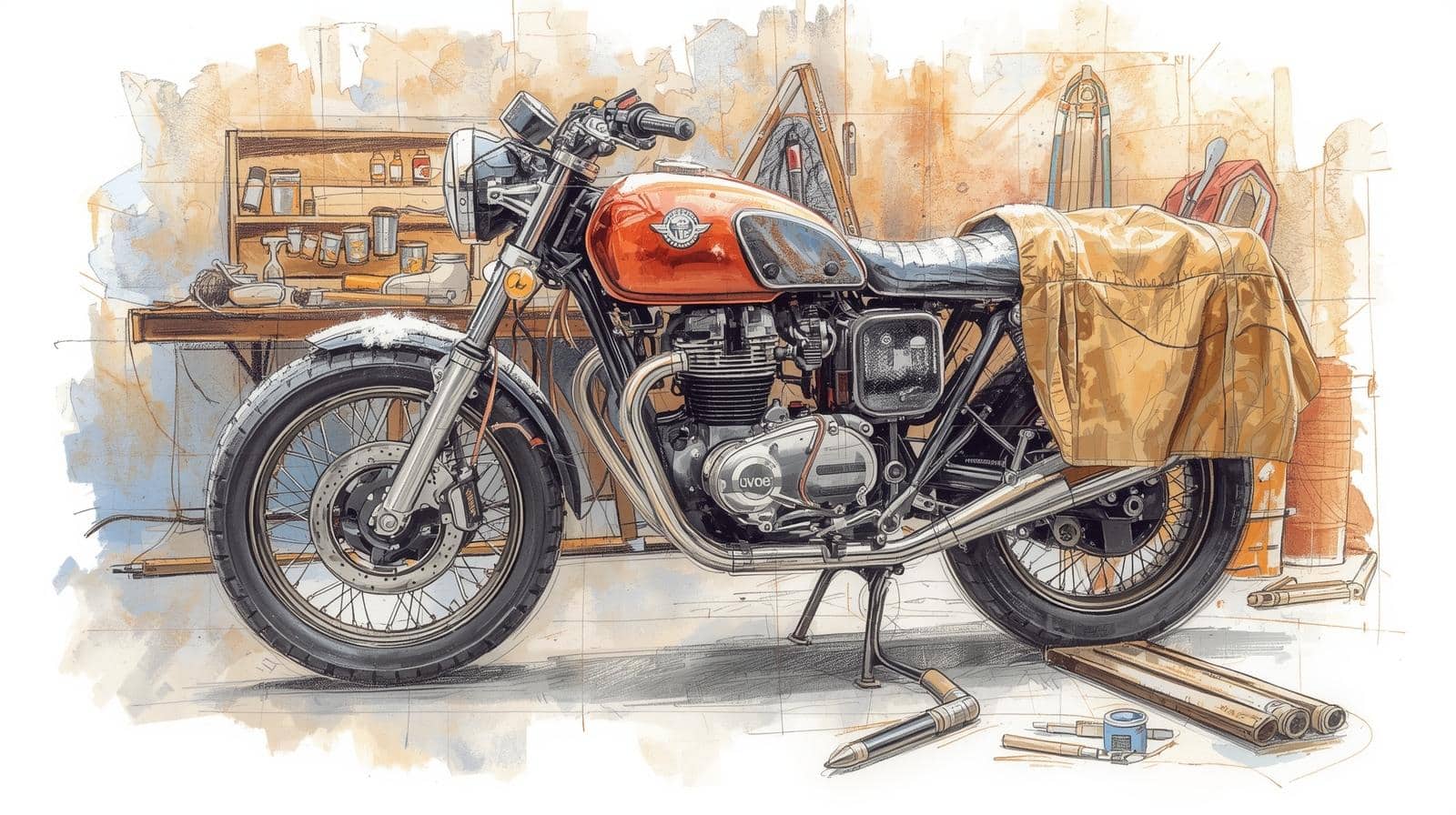
If you’re part of the majority who park their bike during winter, proper winterization is not just a precaution, but an essential maintenance step. Storing your motorcycle improperly during winter can lead to rust, battery failure, degraded fuel systems, and expensive repairs by the time spring returns.
However, you can avoid all that if you follow our in-depth guide on how to winterize your motorcycle. Let’s get down to it!
Find a Secure Winter Storage Option
Well, you can’t winterize your motorcycle if you don’t have secure storage to keep it. If you don’t have a garage at home, you could consider a shed, dealership’s storage service, or a dedicated storage facility with ample security that will keep off anybody with a bad idea of stealing it.
Whichever option you choose, make sure it’s an indoor space with adequate insulation and a heating system to keep out the cold.
Clean Your Motorcycle Before Storage
Road grime, dirt, dead bugs, and salt that accumulate on your bike can gradually corrode the surfaces and damage the paintwork if stored for an extended period over winter. If you don’t want that to happen, you should thoroughly wash your motorcycle with warm water and a mild automotive or motorcycle-specific soap. Be sure to pay close attention to hard-to-reach areas, such as under the seat, near the exhaust, and around the chain and sprockets.
Once the motorcycle is squeaky clean, dry it thoroughly using microfiber towels to prevent moisture from lingering in crevices. Next, wait until the bike is dry and apply a protective coat of wax to all painted surfaces, while polishing any chrome or exposed metal components. To top it off, add a thin layer of WD-40 corrosion inhibitor on the engine and exhaust components to protect against rust.
Take Care of The Battery
If you neglect your battery during winter, it could be depleted over time. To avoid that, you could employ two methods to protect it. The first option is to remove the battery and store it in a warm, dry place, while connected to a smart charger, to regulate charging over extended periods. This could be a suitable precaution option if you’re storing your motorcycle at a facility far from your home.
Alternatively, if you leave the battery in the bike, you can connect it to a tender through a quick-disconnect harness to keep it trickle-charged.
Change the Oil and Oil Filter
Next, turn your attention to the engine. Used engine oil contains contaminants like moisture and combustion byproducts, which can lead to internal corrosion when left to sit in the crankcase over the winter. However, you can prevent this by changing the oil and oil filter before storage.
Additionally, run the engine for a few minutes after the oil change to circulate the fresh oil throughout the engine and transmission.
Top Up Your Engine with Fuel Stabilizer
Used engine oil isn’t the only thing that can give you problems if left sitting for a long time. The gasoline in your engine can deteriorate and create varnish-like deposits that clog carburettors and fuel injectors. If you use ethanol-blended fuel on your motorcycle, it could give you bigger problems since they’re more prone to absorbing moisture, which accelerates internal corrosion. So, what should you do?
First, fill up your tank to about 90 to 95 percent capacity with fresh fuel, then add a high-quality fuel stabilizer. This will help to prevent moisture buildup inside the tank and keep the fuel from degrading. After adding the stabilizer, start the engine and let it run for several minutes, allowing the treated fuel to circulate through the entire fuel system.
Lubricate The Key Components
Over time, components like the chain, throttle cables, and foot controls can stiffen or seize if not properly lubricated. Start by deep cleaning the chain using a suitable degreaser, then apply fresh lubricant to all the chain links. Next, lubricate your clutch and throttle cables, if your bike has them, along with any exposed pivot points, such as the brake lever, shifter, foot pegs, and kickstand. Lubrication protects your components from moisture and corrosion while keeping them responsive when it’s time to ride again.
Prevent Flat Spots on Tires
If you store your motorcycle in one position for months on concrete, it will likely develop flat spots on the tires. To prevent this, inflate your tires to their recommended maximum pressure before storage to help maintain their shape.
If you have motorcycle stands, use them to lift the bike completely off the ground. This takes the weight off the tires and suspension, reducing long-term stress. But if you don’t have stands, consider parking the bike on a piece of carpet, wood, or rubber matting to insulate the tires from cold concrete and roll the bike a few inches to shift the load.
Do an Inspection After Winter
Once the winter season is over, it’s a bad idea to jump on the bike and fire it up without a thorough inspection. Ensure you check the tire pressure, oil level, battery charge, and all control functions, including brakes, signals, and lights, to confirm everything is in good working condition before hitting the road.

Permit.Bike is singularly devoted to the purpose of providing an easy-to-learn and simple approach to the act of riding.