
There are several tried and true motorcycle tips you should use every time you mount your bike. These tips are things you should consider before riding or while on the road.
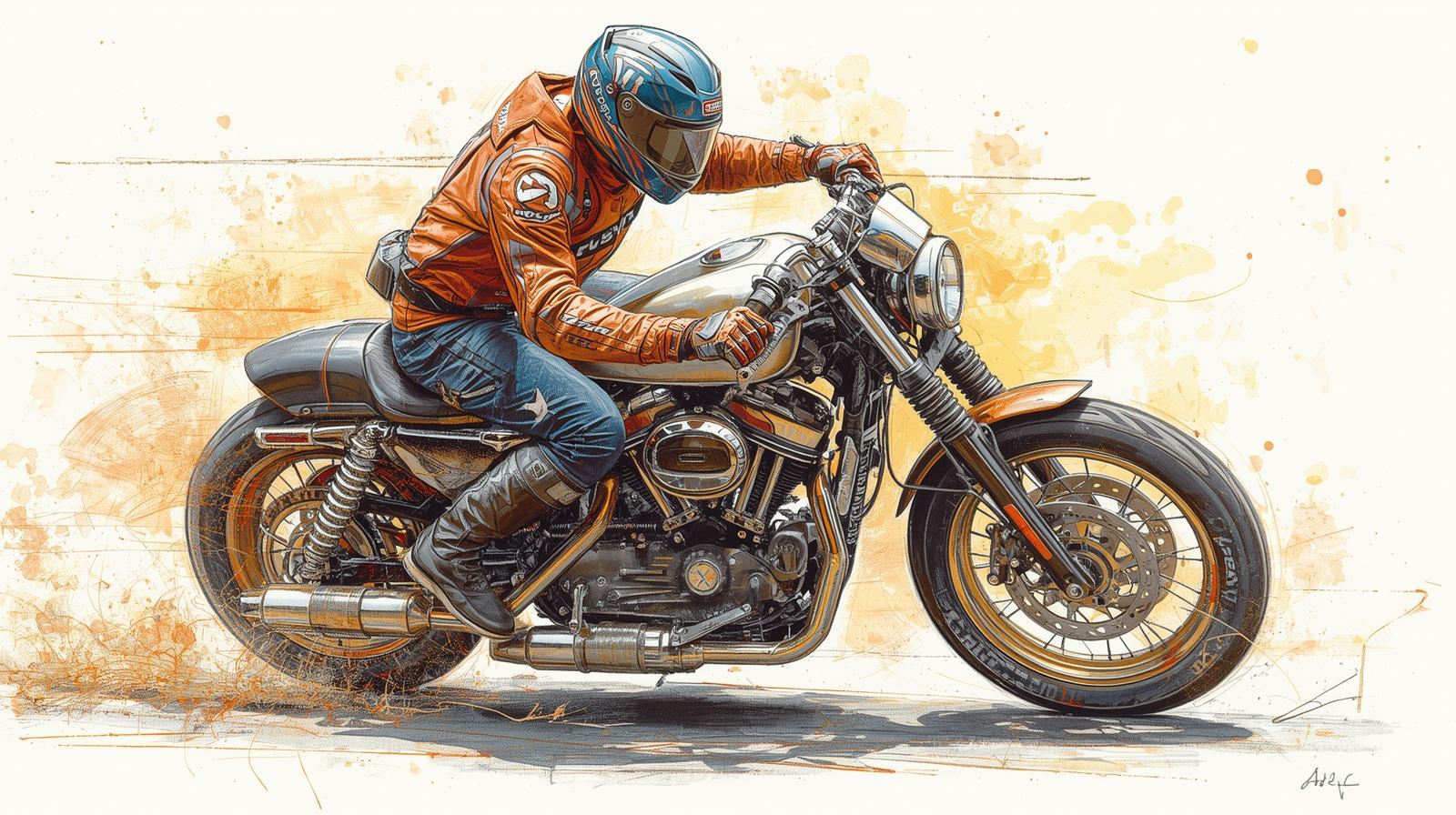
BEFORE YOU RIDE
Wear a DOT helmet. Beanies are cool, but they’re mostly made of cheap plastic and offer little to no protection against head injuries.
Even if it is summertime, wear protective clothing. If you do not have to wear clothes made explicitly for motorcycle riding, at least wear a long-sleeved shirt, pants, over-the-ankle boots, and riding gloves.
Find a comfortable pair of riding glasses, shatterproof sunglasses, or goggles, and make sure you actually wear them.
In any weather condition, wear bright and reflective clothing.
WHEN YOU RIDE
These tips are not just pointers but involve situations you will confront every time you get into your seat.
- Give yourself plenty of space and time to respond to other motorists’ actions.
- Give drivers time and space to respond to you.
- Watch the road conditions. Different scenarios, such as rain, wind, and blinding sun, require different response actions.
- Use a good lane position so other drivers can see you.
- Don’t weave between lanes (One of the most commonly broken rules of young riders)
- Pretend you are invisible and ride totally on the defense. Total defensive driving is the number one rule of riding safely.
- Don’t ride when you are tired. Obviously, don’t drink and ride.
- Stick to the speed limit, especially on curves and rough surfaces. It’s very easy to go too hot into a corner and dump your bike.
- Make sure you ride as visible as possible. Motorists often have problems seeing motorcycles and reacting in time.
- Flash your brake lights a few times as you slow down to stop.
A motorcycle horn is designed for use in dangerous situations. Too many bikers neglect using it.
Never Get Between a Vehicle and an Off-ramp
This can be both disconcerting and dangerous. If any drivers decide to exit a road at the last minute, they can seriously injure a motorcyclist.
Try to ride with your high beams on during the day as much as possible so you have extra visibility. Turn them down if you are behind a car during a stop.
Constantly scan and observe your entire environment while you are riding. Transition from instruments to mirrors, then to the road ahead, followed by blind spots to your left and right rear, and repeat the process.
Always be on the lookout for road hazards. Your two wheels have less contact with the pavement than a car. Sand, wet leaves, or pebbles can cause your bike to slide unexpectedly.
Keep your eyes on the road and physically look where you are going all the time. If you are looking at the ground ahead, that’s where you’ll end up!
Watch your gas gauge. Make sure you turn your choke down once you are warmed and underway. Leaving the choke open will quickly burn fuel.
Make sure you know the local motorcycle laws where you are riding.

Permit.Bike is singularly devoted to the purpose of providing an easy-to-learn and simple approach to the act of riding.